The phrase "human review required" appears in almost every AI policy template written for healthcare. In practice the requirement often collapses into a checkbox that staff click without meaningful engagement. When that happens the practice has the appearance of oversight and almost none of the substance. Designing human review that actually functions is therefore one of the most important operational tasks a small behavioral-health practice faces when it introduces AI into any workflow.
This article describes how we redesigned the review step after an early version proved too fragile. The resulting process is still imperfect. It is, however, visible, trainable, and capable of catching problems before they reach a patient or a permanent record. The redesign was driven by the simple observation that a review step which exists only on paper provides almost no protection when the clinic is busy and the AI output looks polished.
Why Checkbox Review Fails Under Ordinary Conditions
Checkbox review fails for predictable reasons. Staff are busy. The AI output often looks polished. The review step is usually placed at the moment of highest time pressure, just before a message is sent or a note is finalized. Under those conditions the path of least resistance is to accept the output and move on. The checkbox is marked, the policy is technically followed, and the actual judgment is skipped.
In our first attempt we required a single staff member to review and approve the AI-generated checklist. Within two weeks the step had become automatic. Exceptions were almost never logged because the reviewer had already accepted the output. The process looked compliant on paper and provided almost no real protection.

Design Principles for Functional Human Review
We rebuilt the review step around four principles that fit the capacity of a small practice.
First, review must occur at a named point in the workflow with a named role owner. Vague language such as "staff will review" produces diffuse responsibility. Specific language such as "operations lead reviews the checklist for completeness before any patient message is drafted" creates an accountable moment.
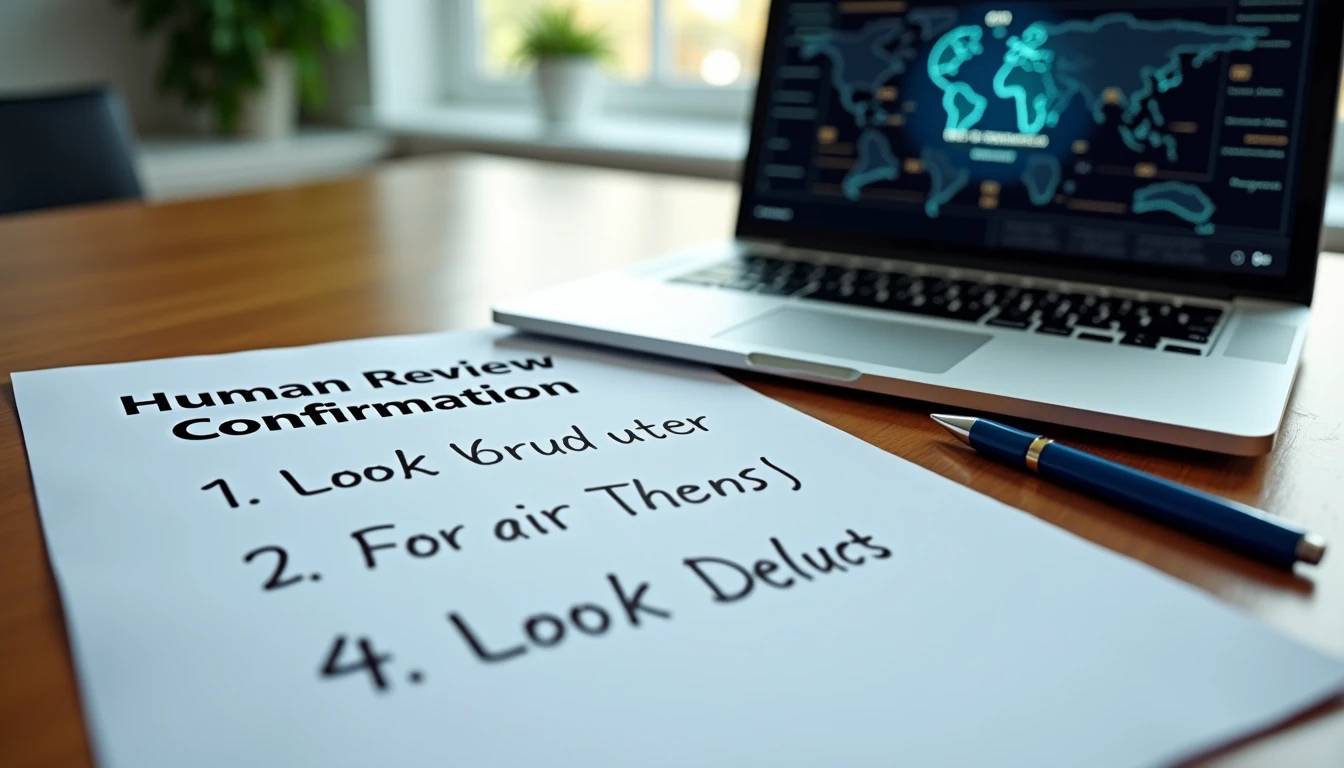
Second, the review input and output must be different enough that the step cannot be performed on autopilot. We require the reviewer to complete a short confirmation form that asks three questions: Is every required field present? Does the output stay within the approved non-clinical scope? Is there any reason this case should be pulled from the AI path? Answering those questions forces a brief moment of attention.
Third, every exception or near-miss must be logged on a single shared form. The log is reviewed weekly. Patterns become visible only when the data is collected consistently.
Fourth, the review step itself is treated as a training topic. New staff practice the review on sample cases before they perform it live. Existing staff revisit the process whenever the workflow changes.
What the Redesigned Review Looks Like in Practice
In the current administrative pilot the sequence is fixed. Staff copy the three approved fields into the secure form. The AI returns the standardized checklist. The operations lead opens the confirmation form, answers the three questions, and either approves or rejects. If approved, a second staff member drafts the patient message by hand, using the checklist only as a memory aid. Both the confirmation form and any rejection reason are stored with the case.
The dual step adds a few minutes. It also creates two independent opportunities to notice problems. The second person is not simply re-checking the AI output; they are producing the final language. That separation keeps the machine contribution from becoming the final clinical or administrative voice.
Measuring Whether Review Is Actually Happening
We treat the exception log and the confirmation forms as evidence. If the log is empty for weeks while volume continues, we investigate whether review is still meaningful. If confirmation forms are completed in under thirty seconds on average, we look at whether the questions are still prompting real attention. These simple metrics do not require sophisticated analytics. They do require the discipline of looking at the data rather than assuming the process is working.
Over time we have also learned to watch for silent drift. When the same staff member begins completing the confirmation form in noticeably less time, or when the language of the exceptions becomes vague, the review step is usually starting to erode. Catching that drift early allows a short refresher rather than a full redesign.
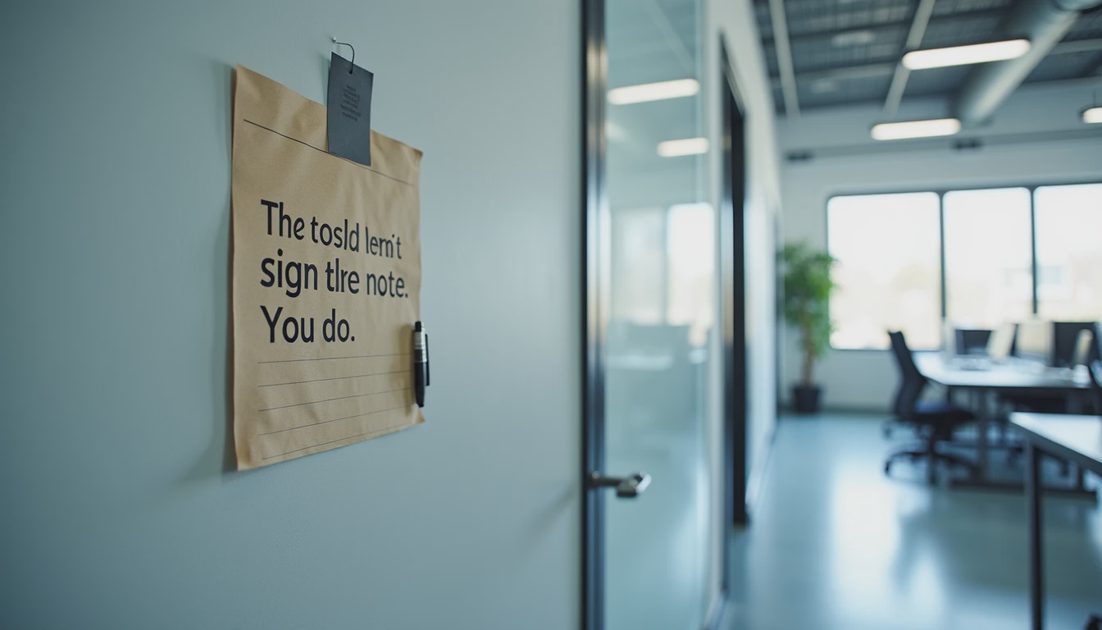
The phrase "the tool doesn't sign the note" is posted near the review station. It is a reminder that the final responsibility remains human even when the draft arrives from a model. The reminder is useful only if the surrounding process makes the human step real rather than theatrical.
That's a judgment call, not a tool question. Designing human review that survives ordinary clinic pressure is more difficult than selecting a tool that claims to support review. The extra design work is the price of a process the practice can later defend.
Slow is not the same as behind. Taking the time to build a review step that people actually perform has proven more valuable than any feature that promised to reduce the need for human attention.